What Dog Food Is Best for Labs? Budget vs Premium
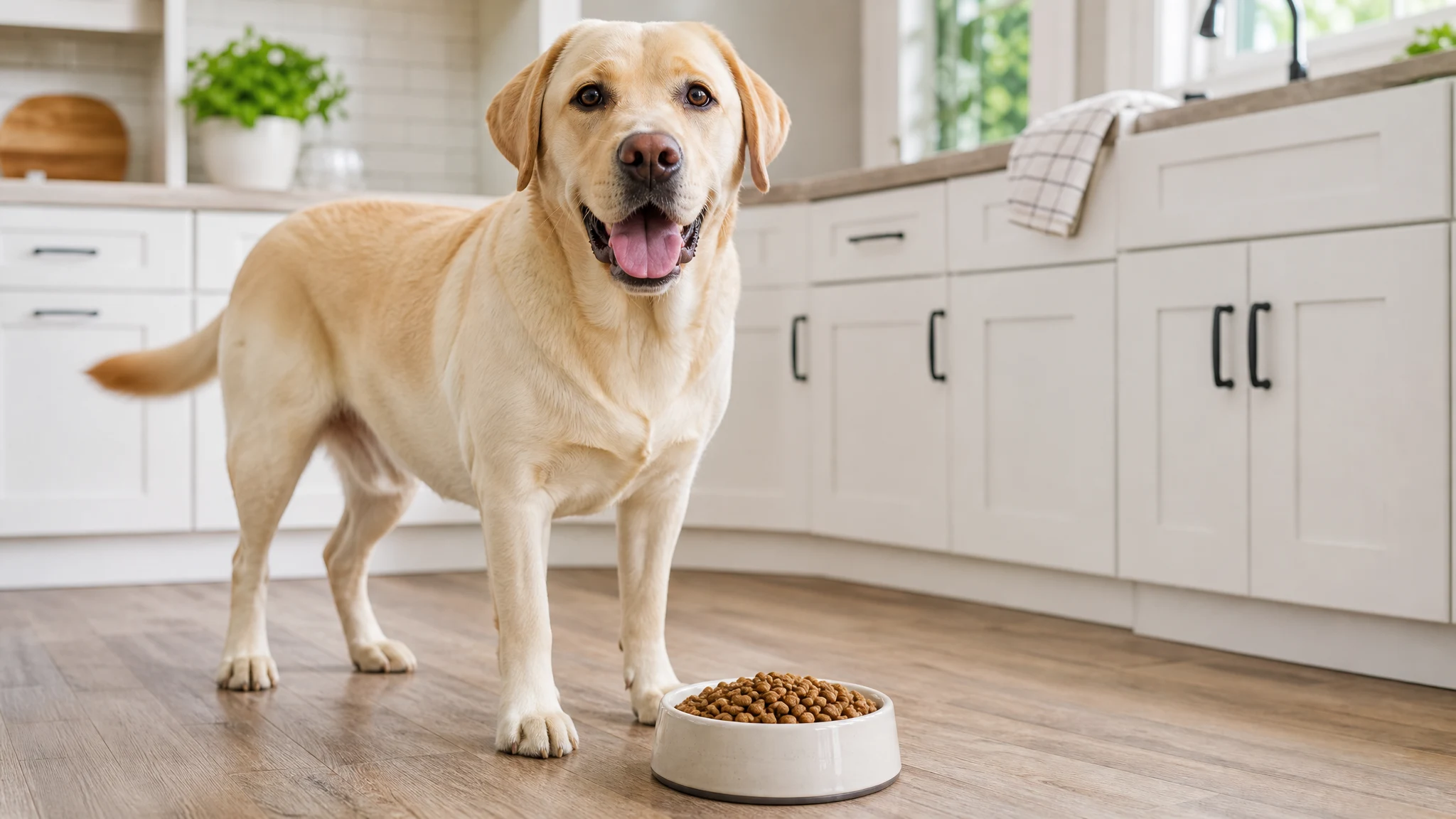
General nutrition information compiled from product labels and published sources, not veterinary advice. Your veterinarian is the right person to choose a diet for your dog, especially one with a health condition.
Price tells you what a bag costs. It does not tell you what is in it. If you are trying to work out what dog food is best for labs, the useful comparison is label against label, then cost per day.
This guide walks through that process for a Labrador Retriever in six steps. We compared label data only. We did not run feeding trials or taste tests, and nothing here says a food prevents or treats any condition.
What You Need Before You Start
- Your dog's age and a recent weight from your veterinarian.
- The bags or brand pages of two or three foods you are considering.
- A calculator.
- The current price and bag weight for each food (check the brand or your local store, since we do not list prices).
- A notebook for your numbers.
Step 1: Know What Size of Dog You Are Feeding
The Labrador Retriever Club, the American Kennel Club parent club, writes in its breed standard that males run about 65 to 80 pounds and females about 55 to 70 pounds in working condition. The standard calls the breed medium-sized.
For puppy food labels, though, size matters in a specific way. AAFCO's large-size cutoff is 70 pounds as an adult, and many male Labs sit at or above it. Treat a Lab puppy as a large-size puppy unless your veterinarian says otherwise.
Step 2: Find the Life Stage Statement
Look for the AAFCO nutritional adequacy statement. It is usually near the guaranteed analysis. It tells you whether the food is for growth, maintenance or all life stages.
For puppies, Whole Dog Journal explains that foods claiming growth or all life stages carry one of two wordings. "Including growth of large-size dogs (70 pounds or more as an adult)" is the one you want. "Except for growth of large-size dogs" means the food is not suited to large-breed puppies.
This one line sorts the field quickly. VICTOR's Hi-Pro Plus, for example, is labeled for all life stages except growth of large-size dogs. VICTOR's Hi-Pro Plus Large Breed Puppy is labeled to include it. Same brand, very different fit for a Lab puppy.
Step 3: Check Calcium for Puppies
Whole Dog Journal reports that large-breed puppy foods cap calcium at 1.8 percent on a dry matter basis, and that large-breed puppies should not get supplemental calcium. Not every label lists calcium, so ask the brand if yours does not.
Hill's Science Diet Puppy Large Breed Chicken & Brown Rice lists calcium at 1.16 percent dry matter average on its page. That sits under the cap.
Step 4: Compare Protein, Fat, Calories and First Ingredients
Now line up the numbers. Two cautions first. Hill's pages show dry matter averages rather than guaranteed minimums, so do not treat them as the same kind of number as the others. And kibble size was not listed for most of these foods, so check the bag if that matters to your dog.
Puppy foods
| Food | Life stage statement | Protein | Fat | Calories per cup | First ingredients |
|---|---|---|---|---|---|
| Royal Canin Labrador Retriever Puppy | Growth, including large-size dogs | 31.0% min | 12.0% min | 307 kcal ME | Chicken by-product meal, brewers rice, brown rice |
| VICTOR Hi-Pro Plus Large Breed Puppy | All life stages, including growth of large dogs | 30% min | 14.0% min | 365 kcal | Chicken, chicken meal, brown rice |
| Hill's Science Diet Puppy Large Breed Chicken & Brown Rice | Growth (feeding tests) | 26.7% (dry matter avg) | 15.4% (dry matter avg) | 387 kcal | Chicken, brown rice, whole grain oats |
Adult foods
| Food | Life stage statement | Protein | Fat | Calories per cup | First ingredients |
|---|---|---|---|---|---|
| Hill's Science Diet Adult Large Breed Chicken & Barley | Adult maintenance (feeding tests) | 23.8% (dry matter avg) | 15% (dry matter avg) | 365 kcal | Chicken, cracked pearled barley, brown rice |
| Hill's Science Diet Adult 6+ Large Breed Chicken Meal, Barley & Rice | Adult maintenance (feeding tests) | 18.7% (dry matter avg) | 13.5% (dry matter avg) | 352 kcal | Chicken meal, cracked pearled barley, brewers rice |
| VICTOR Senior Healthy Weight | Adult maintenance | 27.0% min | 11.5% min | 360 kcal | Beef meal, whole grain brown rice, whole grain millet |
| VICTOR Hi-Pro Plus | All life stages except growth of large-size dogs | 30.0% min | 20.0% min | 406 kcal | Beef meal, grain sorghum, chicken fat |
Royal Canin also makes a Labrador Retriever Adult formula for dogs over 15 months. Figures for it differ between listings we found, so check the numbers on the bag or on Royal Canin's own site before comparing.
Notice the calorie spread. At 275 to 406 kcal per cup across these foods, one cup is not one cup. Hi-Pro Plus is a high-calorie formula for active dogs, which may not suit a dog who gains weight easily.
Fresh options
Nom Nom Chicken Cuisine lists 244 kcal per cup (calculated) and is labeled for all life stages including growth of large-size dogs. JustFoodForDogs Chicken & Rice carries the same large-size growth wording. Its page lists 774 kcal ME per 18 oz pack and gives no per-cup value. Both use a feeding calculator or guide on the brand's site, so use that rather than guessing portions.
Step 5: Work Out Cost Per Day, Not Cost Per Bag
This is where budget versus premium becomes real. We do not list prices, so gather them yourself from the brand or a store.
- Divide the bag weight into cups. The brand page or bag usually gives cups per pound or kilogram.
- Divide the bag price by the number of cups.
- Multiply by the cups your dog eats daily.
A denser food can cost more per bag and less per day, or the other way around. A lower-calorie food needs more cups to deliver the same energy. Only your own arithmetic settles it.
Step 6: Start From the Label Guide, Then Adjust With Your Veterinarian
Treat the feeding chart as a starting point. Hill's pages say to adjust amounts as necessary to maintain optimal weight and to ask your veterinarian if unsure. VICTOR and Royal Canin give similar guidance and suggest changing foods gradually over about 7 to 10 days.
Weight deserves extra care in this breed. A 2016 study in Cell Metabolism (Raffan et al.), listed by the MRC Epidemiology Unit, reported a POMC gene deletion tied to obesity and food motivation. The study found the variant in 12 percent of the Labradors it looked at, and it was more common in assistance dogs than in pets. If your Lab acts constantly hungry, that is a conversation for your veterinarian, not a reason to guess at a diet.
Tips and Common Mistakes
- Buying by price tier alone. A higher price does not appear anywhere on the AAFCO statement. Read the statement instead.
- Feeding an all-life-stages food to a puppy without checking the large-size wording. The "except growth of large-size dogs" wording matters.
- Reading first ingredients as a quality score. They show what is listed first by weight. They do not rate the food. Chicken and chicken meal are different forms, and both can appear in a sound formula.
- Comparing different kinds of numbers. Guaranteed minimums and dry matter averages are not interchangeable.
- Ignoring treats. They count toward daily calories.
- Chasing grain-free as a goal. The FDA's investigation into a possible link between certain diets and canine dilated cardiomyopathy has not been updated since December 23, 2022, and the agency said it did not plan further public updates without meaningful new scientific information. Ask your veterinarian about your individual dog.
- Using a food for a medical purpose without a veterinarian. Prescription diets are something only a veterinarian prescribes. The Labrador Retriever Club's health pages list hip and elbow evaluations as recommended clearances, but they give no diet guidance for those conditions here.
What to Expect
If you choose a food whose life stage statement fits your dog and portion it carefully, you may see steady weight and consistent stools over several weeks. Results vary by dog. Any food change should be gradual, and your veterinarian is the one to judge body condition and growth for your individual dog.
Budget and premium foods can both meet an AAFCO statement. The difference to look for is which food fits your dog's life stage and your daily budget. For a wider side-by-side look, see the best dog food for Labs compared label by label.
Quick Recap
- Confirm your Lab's life stage and likely adult size.
- Find the AAFCO statement and the large-size growth wording for puppies.
- Check calcium where it is listed.
- Compare protein, fat, calories and first ingredients on the same basis.
- Calculate cost per day.
- Start with the label guide and adjust with your veterinarian.
Sources
- Labrador Retriever Club, Labrador Breed Standard
- Labrador Retriever Club, Health Issues
- MRC Epidemiology Unit publications page, Cell Metabolism 2016 (Raffan et al.)
- FDA CVM, Investigation into Potential Link between Certain Diets and Canine DCM
- Whole Dog Journal, In the Fine Print: Nutritional Adequacy Statements
- Whole Dog Journal, Best Large Breed Puppy Food
- Hill's Science Diet Adult Large Breed
- Hill's Science Diet Adult 6+ Large Breed
- Hill's Science Diet Puppy Large Breed
- Royal Canin Labrador Retriever Puppy
- VICTOR Hi-Pro Plus Large Breed Puppy
- VICTOR Senior Healthy Weight
- VICTOR Hi-Pro Plus
- Nom Nom Chicken Cuisine
- JustFoodForDogs Chicken & Rice Recipe