Best Food for Silver Labs: A Label-Based Buying Guide
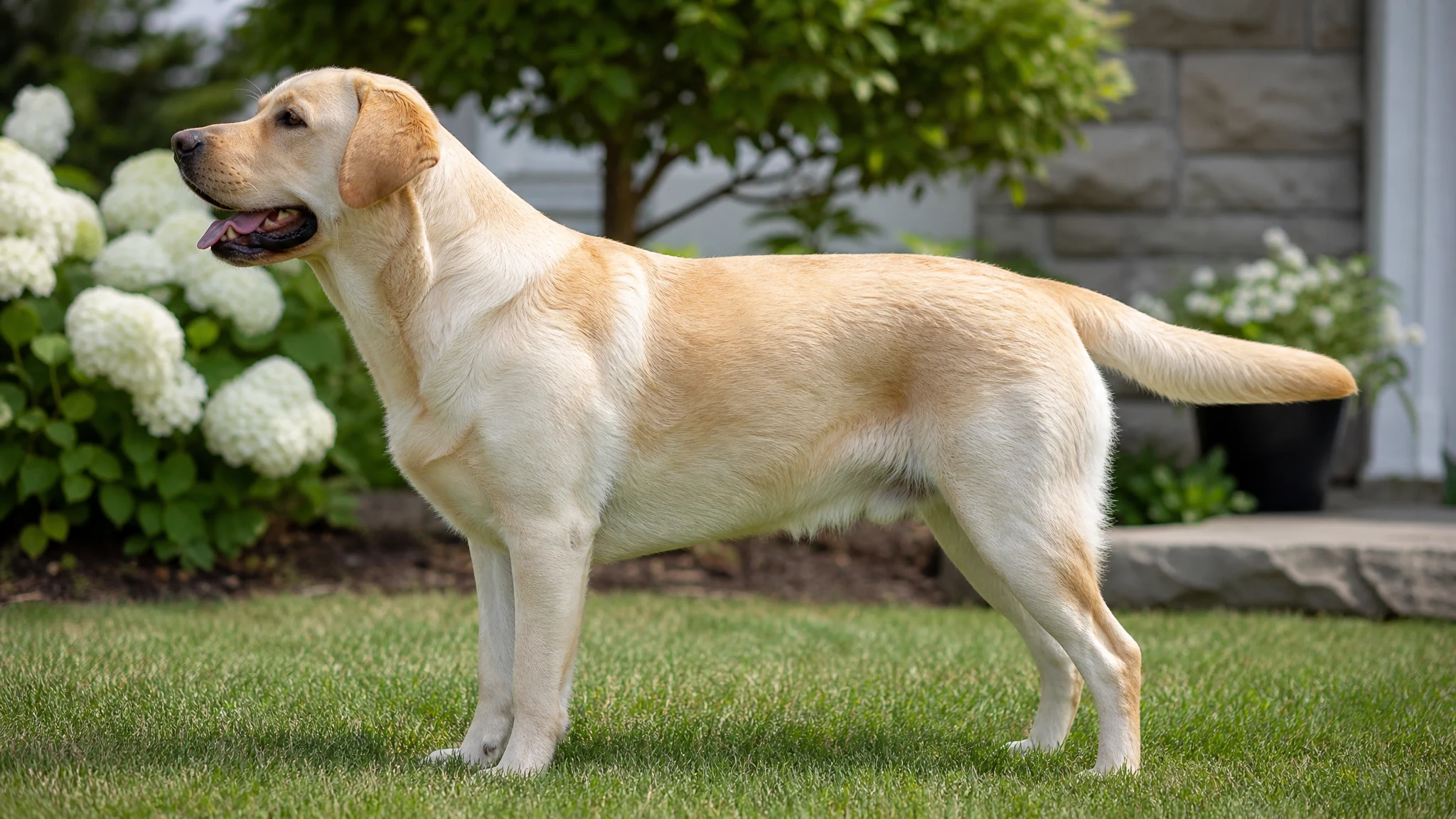
General nutrition information compiled from product labels and published sources, not veterinary advice. Your veterinarian is the right person to choose a diet for your dog, especially one with a health condition.
Silver is a coat color. Dog food labels do not sort by coat color. They sort by life stage, size and nutrient profile.
So the best food for silver labs is found the same way as for any Labrador Retriever: read the label, match it to your dog's age and size, and let your veterinarian make the final call. This guide walks through that process step by step.
One note on method. We compared label data published by the brands. We did not run feeding trials or taste tests, and nothing here is a ranking of which food is "best."
What You Need Before You Start
- Your dog's age and current weight
- A note of your dog's body condition from your veterinarian (lean, ideal or overweight)
- The food bag or the brand's product page
- A measuring cup and a kitchen scale for portions
- A notepad or phone for comparing calories per cup
Step 1: Set Coat Color Aside and Start With Size
The Labrador Retriever Club, the AKC parent club, describes adult males at roughly 65 to 80 pounds and females at roughly 55 to 70 pounds in working condition. Its breed standard words the breed as medium-sized.
For puppy food labeling, though, males sit at or above the 70 pound large-size cutoff used in AAFCO statements. Treat a Lab puppy as a large-size puppy unless your veterinarian says otherwise.
We found nothing in the label data we compared that ties any food to silver, charcoal, chocolate or yellow coats. If a bag claims a food is made for one coat color, ask the brand what that claim is based on.
Step 2: Find the AAFCO Adequacy Statement
Look for the small print that says "complete and balanced." It tells you which life stage the food covers.
- Growth or all life stages: check for the wording "including growth of large-size dogs (70 pounds or more as an adult)."
- Except growth of large-size dogs: this wording means the food is not suitable for a Lab puppy.
- Maintenance: this covers adult dogs only.
Whole Dog Journal explains these two phrasings in its piece on nutritional adequacy statements. It is a secondary source, so confirm the wording on the actual bag.
Step 3: For Puppies, Check the Calcium Cap
Whole Dog Journal reports that large-breed growth formulas cap calcium at 1.8 percent on a dry matter basis. It also advises against supplemental calcium for large-breed puppies.
Not every label prints a dry matter calcium figure. When it is missing, ask the brand, and ask your veterinarian before adding anything to the bowl.
Here is how some puppy formulas read on their own brand pages:
- Royal Canin Breed Health Nutrition Labrador Retriever Puppy is formulated for growth, including growth of large-size dogs. Its page lists 31.0 percent protein and 12.0 percent fat, and 307 kcal ME per cup as fed (calculated).
- Hill's Science Diet Puppy Large Breed Chicken & Brown Rice Recipe lists calcium at 1.16 percent dry matter average and 387 kcal per cup. Its statement says "growing puppies" and the product is sold as large breed.
- VICTOR Hi-Pro Plus Large Breed Puppy is labeled for all life stages, including growth of large dogs. It lists 30 percent protein, 14.0 percent fat and 365 kcal per cup.
Step 4: Compare Calories, Not Just Protein
Labs are known for food motivation. A 2016 study in Cell Metabolism by Raffan and colleagues, listed on the MRC Epidemiology Unit publications page, reported a POMC gene deletion in Labradors. The study put the allele frequency at 12 percent, and it was more common in assistance dogs than in pets.
That does not mean your dog carries it. It is one reason many Labs act hungry all the time, and a reason to watch calories closely.
Write down kcal per cup for each food you consider. The brands we compared list these figures:
| Food | Life stage on label | Calories per cup |
|---|---|---|
| Hill's Science Diet Adult Large Breed Chicken & Barley | Adult maintenance | 365 kcal |
| Hill's Science Diet Adult 6+ Large Breed Chicken Meal, Barley & Rice | Mature adult maintenance | 352 kcal |
| VICTOR Senior Healthy Weight | Adult maintenance | 360 kcal |
| VICTOR Hi-Pro Plus | All life stages except large-size growth | 406 kcal |
| Nom Nom Chicken Cuisine (fresh) | All life stages, including large-size growth | 244 kcal (calculated) |
A food with more calories per cup means a smaller scoop for the same energy. It is not better or worse by itself. For Royal Canin's Labrador Retriever Adult formula, figures we found conflicted between listings, so read the bag itself and check the brand's own page.
Step 5: Read the Ingredient List With Healthy Skepticism
Ingredients are listed by weight, so the first five tell you the most. Compare them without assuming that one style is superior.
- Hill's Adult Large Breed starts with chicken, cracked pearled barley, brown rice, brewers rice and whole grain wheat.
- Royal Canin Labrador Puppy starts with chicken by-product meal, brewers rice, brown rice, corn and wheat gluten.
- VICTOR Hi-Pro Plus Large Breed Puppy starts with chicken, chicken meal, brown rice, whole grain millet and whole grain sorghum.
- Nom Nom Chicken Cuisine, a fresh food, starts with chicken, sweet potatoes, squash, spinach and dicalcium phosphate. It is listed as grain free.
Words like "premium" or "natural" are marketing, not nutrition. Look at the statement and the numbers instead.
On grain-free foods, the FDA investigated a possible link between certain diets and canine dilated cardiomyopathy (DCM). Its last public update on the page was December 23, 2022, and the agency said it would not release further updates without meaningful new scientific information. The Labrador Retriever Club lists the topic as a research area. Ask your veterinarian how it applies to your dog.
Step 6: Treat the Feeding Chart as a Starting Point
Every chart is a guide. Hill's says to adjust amounts as necessary to maintain optimal weight and to ask your veterinarian if unsure. VICTOR's Senior Healthy Weight page includes a weight reduction chart for adults.
Weigh your dog every few weeks. If the scale and your veterinarian's body condition check say your dog is gaining, reduce the scoop slightly and recheck.
For more on how weight, life stage and joints fit into feeding, see our Labrador Retriever nutrition overview.
Step 7: Switch Foods Slowly
Royal Canin advises a transition of at least 7 days, and VICTOR suggests 7 to 10 days. Mix a little of the new food into the old, then increase the share each few days.
Tips and Common Mistakes
- Buying by coat color. Silver, charcoal or any other shade does not change the label requirements.
- Feeding an "except large-size growth" food to a puppy. VICTOR Hi-Pro Plus and its Chicken and Rice Pate carry that exception on their pages.
- Adding calcium to a puppy diet. Whole Dog Journal advises against it for large-breed puppies.
- Ignoring treats. Count them in the daily total.
- Treating food as a medical fix. The Labrador Retriever Club lists hip and elbow evaluations among recommended health clearances, but its health page gives no diet guidance for them. Joint questions belong with your veterinarian. Any prescription diet comes only from a veterinarian.
- Assuming kibble size is the same everywhere. The brand pages we read did not list kibble size in measurements, so ask the brand if size matters for your dog.
What Results to Expect
If you match the food to life stage and watch portions, you may see steady weight, consistent stools and good energy within several weeks. Individual dogs vary, and no food can promise a particular outcome.
A food does not prevent or treat hip dysplasia, allergies, DCM, bloat or any other condition. If your dog's appetite, stool or weight changes, call your veterinarian before changing the diet again.
Sources
- Labrador Retriever Club, Labrador Breed Standard
- Labrador Retriever Club, Health Issues
- Raffan et al., Cell Metabolism 2016, via the MRC Epidemiology Unit
- FDA Center for Veterinary Medicine, DCM investigation
- Whole Dog Journal, In the Fine Print: Nutritional Adequacy Statements
- Whole Dog Journal, Best Large Breed Puppy Food
- Hill's Science Diet Puppy Large Breed
- Hill's Science Diet Adult Large Breed
- Hill's Science Diet Adult 6+ Large Breed
- Royal Canin Labrador Retriever Puppy
- VICTOR Hi-Pro Plus Large Breed Puppy
- VICTOR Senior Healthy Weight
- VICTOR Hi-Pro Plus
- VICTOR Chicken and Rice Formula Pate
- Nom Nom Chicken Cuisine