Human Foods Labs Should Never Eat
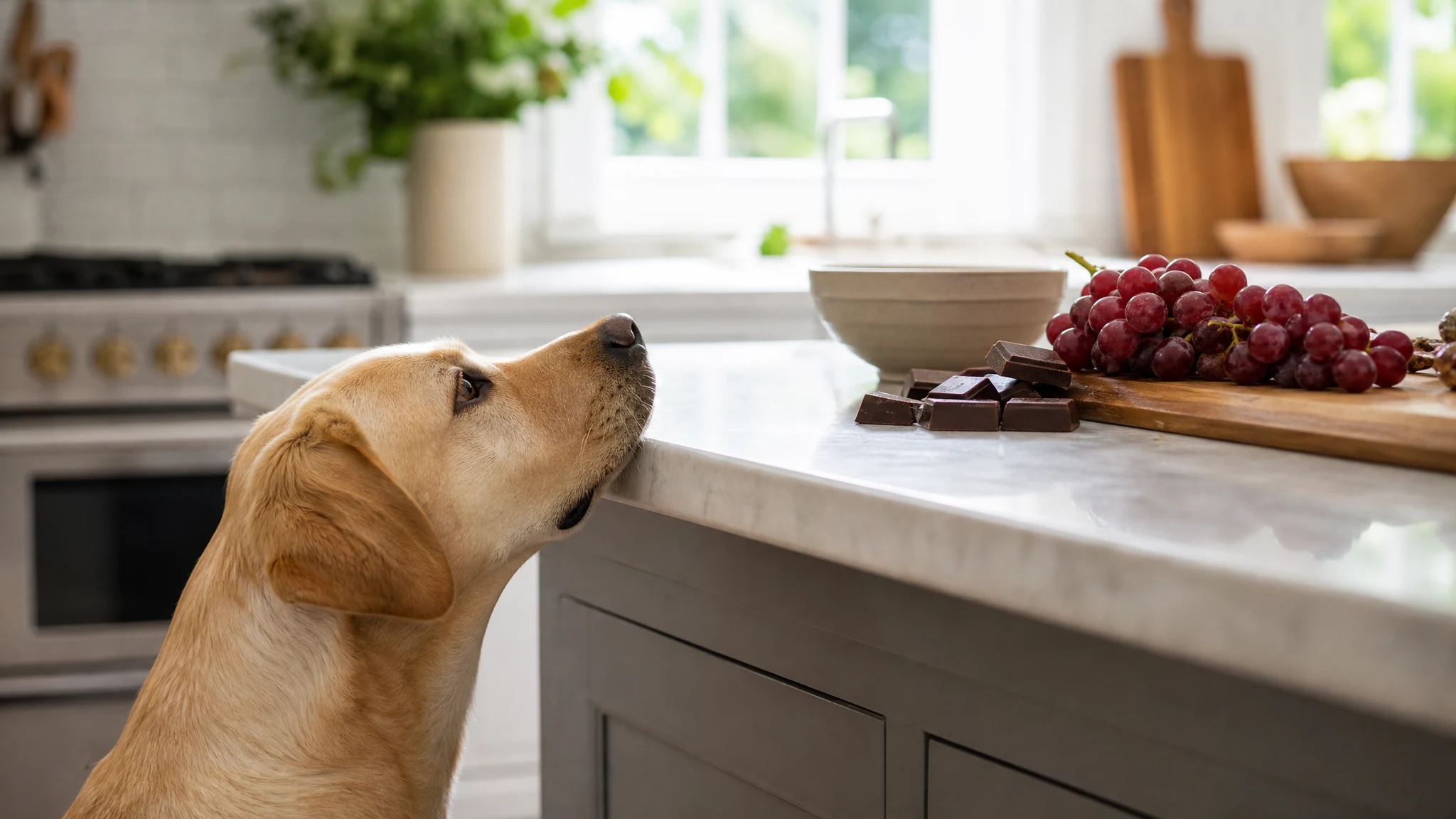
General nutrition information compiled from product labels and published sources, not veterinary advice. Your veterinarian is the right person to choose a diet for your dog, especially one with a health condition.
Labrador Retrievers will eat almost anything, which makes the question "can labs eat this?" come up often. The ASPCA Animal Poison Control Center keeps a list of human foods that are unsafe for dogs, and this page walks through the ones that matter most for a Lab household.
The answers below are general. They are not a substitute for your veterinarian, who knows your individual dog.
Why Labs Need Extra Care Around Human Food
Why are Labs more at risk of eating the wrong thing?
Many Labs are intensely food motivated. A 2016 study in Cell Metabolism (Raffan et al.) reported a deletion in the POMC gene in 12 percent of the Labradors studied, and found it more common in assistance dogs than in pets. The study links that gene to obesity and food motivation, so a Lab that steals from the counter may be driven by biology, not bad manners.
How big is a Lab, and does size change the risk?
The Labrador Retriever Club breed standard describes males at roughly 65 to 80 pounds and females at roughly 55 to 70 pounds in working condition. A big dog can still be seriously harmed by a small amount of a dangerous food. Never assume your Lab is too large to be affected.
Is "human food" always off limits?
No. Some plain whole foods are fine as occasional treats, and a few are covered further down. The problem foods are specific ones, plus anything rich, salty or seasoned.
Foods That Are Toxic to Dogs
Is chocolate dangerous for Labs?
Yes. The ASPCA lists chocolate, along with coffee and other caffeine sources, as unsafe for dogs because of compounds called methylxanthines. Darker and baking chocolate are generally of greater concern than milk chocolate, but none of it is a safe treat.
Can Labs eat grapes or raisins?
No. The ASPCA lists grapes and raisins as foods that can cause kidney problems in dogs. The reason some dogs react is not fully understood, so there is no "safe" amount to count on.
What is xylitol and where is it found?
Xylitol is an artificial sweetener, and the ASPCA lists it as dangerous for dogs. It turns up in some sugar-free gum, candy, baked goods and certain nut butters. Read the ingredient list before sharing peanut butter, and keep gum and mints out of reach of a curious Lab.
Are onions and garlic bad for dogs?
Yes. The ASPCA includes onions, garlic and chives (raw, cooked or powdered) among the foods to avoid, because they can damage a dog's red blood cells. That includes leftovers, gravy and soups seasoned with them.
Can Labs eat macadamia nuts?
No. The ASPCA lists macadamia nuts as toxic to dogs. Cookies and trail mix that contain them are a common way a Lab ends up eating them by accident.
Is alcohol ever safe for dogs?
No. The ASPCA lists alcohol as unsafe, and that covers drinks, some cocktail mixers and foods made with alcohol. Unattended glasses at a party are an easy target for a tall Lab.
What about raw yeast dough?
The ASPCA warns against it. Raw dough can expand in the stomach, and the fermenting yeast produces alcohol. Keep rising bread well out of reach.
Are avocado, citrus, coconut and dairy on the list too?
The ASPCA includes avocado, citrus, coconut products and milk or dairy among foods to avoid or limit for dogs. The concerns differ: avocado contains a compound called persin, and dairy can upset the stomach of dogs that do not tolerate lactose. Ask your veterinarian before offering any of them.
Everyday Foods That Cause Trouble
Is it okay to give a Lab table scraps?
It is best not to. Fatty trimmings, salty leftovers and heavily seasoned dishes can upset a dog's stomach, and the ASPCA lists high salt and fat among its cautions. Scraps also add calories fast, which matters for a breed prone to gaining weight.
Can Labs eat cooked bones?
Avoid them. The ASPCA warns against bones, and cooked bones can splinter. A Lab that gulps food may also swallow large pieces whole, which can cause a blockage.
What about raw or undercooked meat and eggs?
The ASPCA cautions against raw or undercooked meat, eggs and bones because of the risk of bacteria such as Salmonella and E. coli. If you are curious about fresh or raw-style feeding, talk it over with your veterinarian first.
Safe Snacks for Labs
What can labs eat as a safe treat?
Plain, unseasoned vegetables such as carrots or green beans are common low-calorie choices, and many owners use them to stretch a training session. Offer them in bite-size pieces so an eager Lab does not gulp a large chunk. Check with your veterinarian before adding any new food.
Will treats affect my Lab's regular diet?
They can. Treats add calories on top of the daily food, so many owners trim the meal slightly to compensate. Your veterinarian can help set a plan, and the label-by-label dog food comparison shows calories per cup so you can see how much a bowl of kibble contributes. We compared label data there; we did not run feeding trials or taste tests.
What to Do in an Emergency
What should I do if my Lab eats something toxic?
Act quickly. Call your veterinarian, an emergency clinic, or ASPCA Animal Poison Control right away, even if your dog looks fine. Look up current contact details on the ASPCA website now and save them on your phone, so you are not searching during a crisis.
What information should I have ready?
Note what your dog ate, roughly how much, and when. Keep the package or ingredient list handy, and know your dog's approximate weight. This helps the professional advise you faster.
Should I make my dog vomit at home?
Only if a veterinarian or poison control professional tells you to. Some substances do more harm coming back up, and home remedies can be risky. Let them guide each step.
Sources
- Labrador Retriever Club (AKC parent club), Labrador Breed Standard
- Cell Metabolism 2016 (Raffan et al.), via the MRC Epidemiology Unit publications page
The ASPCA Animal Poison Control Center maintains the list of toxic and unsafe foods referenced above. Check its website for the full current list and contact details.